
Safeguarding Policy
-
1Table of Contents
- Aim of This Policy
- Purpose and Aims
- Our Ethos
- Roles and Responsibilities
- Training and Induction
- Procedures for Managing Concerns
- Definitions
- Contextual Safeguarding
- Extra-Familial Harm
- Reporting
- Storing and Recording Information
- Records and Information Sharing
- Working with Parents and Carers
- Child Protection Conferences
- Safer Recruitment
- Safer Working Practice
- Managing Allegations against Staff and Volunteers
- Relevant Policies
- Statutory Framework
Appendix 1– Suspect Child at Risk: Action to Take
Appendix 2 – Safeguarding Induction Sheet (for New or Supply Staff and Regular Visitors or Volunteers)
Appendix 3 – Vulnerability
Appendix 4 – Child Sexual Exploitation
Appendix 5 – Child Criminal Exploitation/County Lines
Appendix 6 – Belief and Faith-Related Abuse: Female Genital Mutilation
Appendix 7 – So-Called ‘Honour-Based’ Violence
Appendix 8 – Forced Marriage
Appendix 9 – Radicalisation
Appendix 10 – Private Fostering
Appendix 11 – Children Missing Education
Appendix 12 – Peer on Peer Abuse
Appendix 13 – Sexually Harmful Behaviour
Appendix 14 – Trafficking and Modern Slavery
Appendix 15 – Domestic Abuse
Appendix 16 – Self Harm
Appendix 17 – Contacts
Appendix 18 – Child Safeguarding Practice and Child Death Review
Appendix 19 – Recording, Storage, and Sharing of Information
Additions to Our Policy1. Aim of This Policy
Children and vulnerable adults have the right to live free from harm regardless of age, disability, race, religion or belief, gender, or sexual orientation and have a right to equal protection from all types of abuse and harm.
Innovate Dorset Ltd. recognises as its responsibility that an essential part of our practice is working in partnership with other agencies to provide parents, staff, and volunteers with these principles that guide our approach to child protection and promote the welfare of children and vulnerable adults, ensuring our practice protects all those who receive support from Innovate Dorset Ltd., and developing a safer environment for all.
Kevin Tatchell - 25th September 2019.
2. Purpose and Aims
In this document, references to ‘(the) Company’ are to Innovate Dorset Ltd. All references in this document to ‘staff/members of staff’ or ‘employee/employees’ are to all paid or unpaid staff/practitioners and volunteers of Innovate Dorset Ltd.
The Company is committed to safeguarding and promoting the welfare of all young people. The purpose of its Safeguarding Policy is to ensure every child who is referred to the Company is safe and protected from harm. This means the Company will always work to:
Protect children and young people at the Company from maltreatment.
Prevent the impairment of children’s and young people’s health or development.
Ensure that children and young people at the Company grow up in circumstances consistent with the provision of safe and effective care.
Undertake that role to enable children and young people at the Company to have the best outcomes.
This Policy will give clear direction to staff, volunteers, visitors, and parents about expected behaviour and the legal responsibility to safeguard and promote the welfare of all children at the Company.
The Company fully recognises the contribution it can make to protect children from harm and aims to support and promote the welfare of all children and young people. The elements of this Policy are: prevention, protection, and support.
The Company recognises that its safeguarding responsibilities are clearly linked to those for ensuring that appropriate safeguarding responses are in place for children who are absent from the Company or who go missing from education, particularly on repeat occasions. All staff are trained to raise any persistently absent young people and those who go missing to the Designated Safeguarding Lead (DSL), to identify any potential risk of abuse and neglect, including sexual abuse or exploitation, and to ensure that appropriate safeguarding responses have been put in place to reduce any risk of future harm.
This Policy applies to all young people, staff, parents, volunteers, and visitors to the Company.
3. Our Ethos
The child’s welfare is of paramount importance. The Company will establish and maintain an ethos where young people feel secure, are encouraged to talk, are listened to, and are safe. Children at the Company will be able to talk freely to any member of staff if they are worried or concerned about something.
Everyone who comes into contact with children and their families has a role to play in safeguarding children. The Company recognises that staff play a particularly important role, as they are in a position to identify concerns early and provide help for children to prevent concerns from escalating. All staff are advised to maintain an attitude of ‘it could happen here’ where safeguarding is concerned. When concerned about the welfare of a child, staff members must always act in the best interests of the child.
All staff and regular visitors will, through training and induction, know how to recognise indicators of concern, how to respond to a disclosure from a child, and how to record and report this information. Staff will not agree to make promises to any child and will not keep secrets. The adult will make it clear to the child what they will have to do with any information they have chosen to disclose.
Throughout our curriculum, the Company will provide activities and opportunities for children to develop the skills they need to identify risks and stay safe. This will also be extended to include material that will encourage children to develop essential life skills.
At all times, the Company will work in partnership and endeavour to establish effective working relationships with parents, carers, and colleagues from other agencies in line with Keeping children safe in education - GOV.UK (2025) and work in partnership with local safeguarding procedures.
4. Roles and Responsibilities
It is the responsibility of every member of staff, volunteer and visitor to the Company to ensure that they carry out the requirements of this Policy and, at all times, work in a way that will safeguard and promote the welfare of all young people. This includes the responsibility to provide a safe environment in which children can learn.
The Company Safeguarding Team are accountable for ensuring the effectiveness of this Policy and compliance with it. Although the Company Senior Leadership Team (SLT) takes collective responsibility to safeguard and promote the welfare of all, there is also a DSL who has day-to-day responsibility for safeguarding within the Company.
The Company Safeguarding Team will ensure that:
The Safeguarding Policy is in place and reviewed annually, is available publicly via the Company website, and has been written in line with Local Authority guidance and the requirements of the local safeguarding partners’ policies and procedures.The Company contributes to inter-agency working in line with Keeping children safe in education - GOV.UK (2025).
The DSL will take the lead responsibility for safeguarding and child protection and there is a Deputy Designated Safeguarding Lead (DDSL) in place who is appropriately trained to deal with any issues in the absence of the DSL. There will always be cover for this role.
All staff receive induction in safeguarding on appointment and are provided with a copy of this Policy and the Staff Code of Conduct.
All staff undertake appropriate child protection training that is regularly updated, at least annually. Appropriate procedures are in place for dealing with allegations against members of staff and volunteers in line with statutory guidance.
Safer recruitment practices are followed in accordance with the requirements of Keeping children safe in education - GOV.UK (2025). This includes the requirement to inform applicants of online searches taking place as part of the recruitment due diligence checks ahead of any interview.
Guidance in the form of new constructions and recommendations regarding online filtering.
The Company Safeguarding Team will complete termly reports detailing a summary of the concern and action taken.
Termly updates will be shared with the Safeguarding Team to ensure correct protocols are followed at all times, along with an overview of young people and children currently at risk of harm.
The DSL is responsible for:
Identifying a member of staff to be the DDSL.
Identifying alternative members of staff to act as the DSL and/or the DDSL in their absence to ensure there is always cover for these roles.
Ensuring that the policies and procedures are noted by the Company SLT, particularly concerning referrals of cases of suspected abuse and neglect, and are followed by all staff.
Ensuring that all staff and volunteers feel able to raise concerns about poor or unsafe practice and that such concerns are addressed sensitively in accordance with the Company’s Whistle-Blowing Procedures.
Liaising with the Local Authority Designated Officer (LADO) in the event of an allegation of abuse being made against a member of staff.
The DSL takes lead responsibility for safeguarding and child protection within the Company. The DSL will carry out their role in accordance with the responsibilities outlined in Annex C of Keeping children safe in education - GOV.UK (2025).
The DSL will provide advice and support to other members of staff on child welfare and child protection matters. Any concern for a child’s safety or welfare will be recorded in a timely fashion using internal Concern Forms. If this resource is not readily available at the time, then a paper record should be made and handed to the DSL and then scanned in as soon as is practical.
During term time, the DSL and/or the DDSL will always be available (during working hours) for staff in the Company to discuss any safeguarding concerns. If, in exceptional circumstances, neither of them is available on the Company site in person, they will be available via telephone or other means of communication.
The Company DSL or DDSL will attend Child Protection Conferences and core group meetings. Through appropriate training, knowledge and experience, they, or another appropriately designated member(s) of staff, will liaise with Children’s Services and other agencies where necessary, and make referrals of suspected abuse to them, take part in strategy discussions and other interagency meetings, and contribute to the assessment of children.
The DSL will oversee written records and child protection files, ensuring that they are kept confidential and stored securely.
The DSL is responsible for ensuring that all staff members and volunteers are aware of the Policy and the procedure they need to follow. They will ensure that all staff, volunteers, and regular visitors have received appropriate child protection information during induction.
5. Training and Induction
When new staff join the Company, they will be informed of the safeguarding arrangements in place during their initial induction process. They will be given a copy of the Company Safeguarding Policy, along with the Staff Code of Conduct, Part One of Keeping children safe in education - GOV.UK (2025), and informed who the DSL and DDSL are. All staff are expected to read these key documents (and to sign a staff register to confirm that they have read Part One) and fully understand their responsibilities. They will also be informed of the Company's recording procedures.
Every new member of staff or volunteer will receive safeguarding training during their induction period within the first half term of joining the Company. This programme will include information relating to signs and symptoms of abuse, how to manage a disclosure from a child, how to record disclosures, and the remit of the role of the DSL. The training will also include information about whistle-blowing in respect of concerns about another adult’s behaviour and suitability to work with children, and will include filtering and online monitoring as outlined in the updated Keeping children safe in education - GOV.UK (2025).
In addition to the safeguarding induction, the Company will ensure that mechanisms are in place to assist staff to understand and discharge their role and responsibilities as set out in Part One of Keeping children safe in education - GOV.UK (2025). In order to achieve this, the Company will ensure that:
All members of staff will undertake appropriate safeguarding training on an annual basis.
The Company will evaluate the impact of this training.
All staff members will receive regular safeguarding and child protection updates (for example, via email, e-bulletins, staff meetings), as required, but at least annually, to provide them with the relevant skills and knowledge to safeguard children effectively.
All visitors, temporary staff and volunteers to the Company will be given a set of safeguarding procedures; they will be informed who the DSL and alternative staff members are and what the recording and reporting system is.
The DSL, the alternative designated member(s) of staff and any other senior member of staff who may be in a position of making referrals or attending child protection conferences or core groups will attend appropriate training. In addition to formal training, the DSL will ensure that they update their knowledge and skills at regular intervals, but at least annually, to keep up with any developments relevant to their role.
The Company DSL and DDSL will also undertake appropriate training to ensure they are able to carry out their duty to safeguard all the children at the Company.
The Company actively encourages all staff to keep up to date with the most recent local and national safeguarding advice and guidance; Annex A of Keeping children safe in education - GOV.UK (2025) provides links to guidance on specific safeguarding issues such as Child Sexual Exploitation and Female Genital Mutilation. In addition, throughout the Company year, the Company will brief staff on key issues identified within Keeping children safe in education - GOV.UK (2025).
Why safeguarding is important. The Company will ensure that children receive the right help, at the right time, to address risk and prevent issues from escalating. Research and serious case reviews have repeatedly shown the dangers of failing to take effective action, which include:
- Failing to act and refer early signs of abuse and neglect.
- Poor record-keeping.
- Failing to listen to the views of the child.
- Failing to re-assess concerns when situations do not improve.
- Not sharing information, delays in sharing.
- Lack of challenge to those who appear not to be acting.
The Company Policies and Procedures aim to address all areas of poor practice, and the Company ensures staff seek advice when unsure.
All staff should have an awareness of safeguarding issues, some of which are listed below. They should be aware that behaviours linked to drug taking, alcohol abuse, truancy and sexting put children in danger. All staff should be aware that safeguarding issues can manifest themselves via peer-on-peer abuse. This is most likely to include, but may not be limited to, bullying (including online or cyber bullying),gender-based violence/sexual assaults and sexting. Staff should be clear as to the Company’s Policy and Procedures with regard to peer-on-peer abuse.
Expert and professional organisations are best placed to provide up-to-date guidance and practical support on specific safeguarding issues. For example, information can be found on the TES and NSPCC websites. Company staff can access government guidance as required on the issues listed below via GOV.UK and other government websites (see also the Appendices below for more information on some of these issues):
- Bullying, including online bullying.
- Child sexual exploitation (CSE).
- Children missing education.
- Children missing from home or care.
- Domestic abuse.
- Drugs.
- Fabricated or induced illness.
- Faith based abuse.
- Female genital mutilation (FGM).
- Forced marriage.
- Gangs and youth violence.
- Gender-based violence/violence against women and girls (VAWG).
- Hate.
- Mental health.
- Missing children and adults.
- Preventing radicalisation.
- Private fostering.
- Relationship abuse.
- Sexting.
- Sexual violence and harassment between children in academies and colleges.
Trafficking and modern slavery.
6. Procedures for Managing Concerns
All staff must follow the Company’s procedures, which are consistent with Working together to safeguard children - GOV.UK (2023).
It is not the responsibility of staff to investigate welfare concerns or determine the truth of any disclosure or allegation. All staff, however, have a duty to recognise concerns and maintain an open mind. Accordingly, all concerns regarding the welfare of young people will be recorded and discussed with the designated senior person with responsibility for child protection (or another senior member of staff in the absence of the designated person) prior to any discussion with parents.
Adults in the Company are well placed to observe any physical, emotional, or behavioural signs that indicate a child may be suffering significant harm. The relationships between staff, young people, parents, and the public, which foster respect, confidence and trust, can lead to disclosures of abuse and/or Company staff being alerted to concerns.
7. Definitions
As in the Children Acts 1989 and 2004, a child is anyone who has not yet reached his/her 18th birthday.
Harm means ill-treatment or impairment of health and development, including, for example, impairment suffered from seeing or hearing the ill-treatment of another.
Development means physical, intellectual, emotional, social, or behavioural development; health includes physical and mental health; ill-treatment includes sexual abuse and other forms of ill-treatment which are not physical.
Abuse and neglect are forms of maltreatment. Somebody may abuse or neglect a child by inflicting harm or failing to act to prevent harm. Children may be abused in a family or in an institutional or community setting, by those known to them, or, more rarely, by others. Abuse can take place wholly online, or technology may be used to facilitate offline abuse. Children may be abused by an adult or adults or by another child or children.
Physical abuse may involve hitting, shaking, throwing, poisoning, burning, or scalding, drowning, suffocating, or otherwise causing physical harm to a child. Physical harm may also be caused when a parent or carer fabricates the symptoms of, or deliberately induces illness in, a child.
Sexual abuse involves forcing or enticing a child or young person to take part in sexual activities, not necessarily involving a high level of violence, whether or not the child is aware of what is happening. The activities may involve physical contact, including assault by penetration (for example, rape or oral sex) or non-penetrative acts such as masturbation, kissing, rubbing, and touching outside of clothing. They may also include non-contact activities, such as involving children in looking at, or in the production of, sexual images, watching sexual activities, encouraging children to behave in sexually inappropriate ways, or grooming a child in preparation for abuse (including via the internet). Sexual abuse is not solely perpetrated by adult males; women can also commit acts of sexual abuse, as can other children.
Emotional abuse is the persistent emotional maltreatment of a child, such as to cause severe and persistent adverse effects on the child’s emotional development. It may involve conveying to children that they are worthless or unloved, inadequate, or valued only insofar as they meet the needs of another person. It may include not giving the child opportunities to express their views, deliberately silencing them or ‘making fun’ of what they say or how they communicate. It may feature age or developmentally inappropriate expectations being imposed on children. These may include interactions that are beyond the child’s developmental capability, as well as overprotection and limitation of exploration and learning, or preventing the child from participating in normal social interaction. It may involve seeing or hearing the ill-treatment of another. It may involve serious bullying(including online bullying), causing children to frequently feel frightened or in danger, or the exploitation or corruption of children. Some level of emotional abuse is involved in all types of maltreatment of a child, though it may occur alone.
Neglect is the persistent failure to meet a child’s basic physical and/or psychological needs, likely to result in the serious impairment of the child’s physical or mental health or development. Neglect may occur during pregnancy as a result of maternal substance abuse. Once a child is born, neglect may involve a parent or carer failing to:
- Provide adequate food, clothing and shelter (including exclusion from home or abandonment).
- Protect a child from physical and emotional harm or danger.
- Ensure adequate supervision (including the use of adequate caretakers).
- Ensure access to appropriate medical care or treatment.
It may also include neglect of, or unresponsiveness to, a child’s basic emotional needs.
8. Contextual Safeguarding
Safeguarding incidents and/or behaviours can be associated with factors outside the Company and can occur between children outside the Company. Staff should consider the context within which such incidents and/or behaviours occur. This will be done through assessing the wider environmental factors present in a child’s life that are a threat to their safety and welfare.
9. Extra-Familial Harm
All staff should consider whether children are at risk of abuse or exploitation in situations outside their families. Extra-familial harms take a variety of different forms, and children can be vulnerable to multiple harms, including, but not limited to, sexual abuse (including harassment and exploitation), domestic abuse in their own intimate relationships (teenage relationship abuse), criminal exploitation, serious youth violence, county lines, and radicalisation.
10. Reporting
Staff must immediately report:
Any suspicion that a child is injured, marked, or bruised in a way that is not readily attributable to the normal knocks or scrapes received in play.
Any explanation given that appears inconsistent or suspicious.
Any behaviours that give rise to suspicions that a child may have suffered harm (e.g. worrying drawings or play).
Any concerns that a child may be suffering from inadequate care, ill treatment, or emotional maltreatment.
Any concerns that a child is presenting signs or symptoms of abuse or neglect.
Any significant changes in a child’s presentation, including non-attendance.
Any hint or disclosure of abuse from any person.
Any concerns regarding (a) person(s) who may pose a risk to children (e.g. living in a household with children present).
Staff are also encouraged to actively consider children who might present as vulnerable (see Appendix 3). Disclosures or information may be received from young people, parents, or other members of the public. The Company recognises that those who disclose such information may do so with difficulty, having chosen carefully to whom they will speak. Accordingly, all staff will handle disclosures with sensitivity. Such information cannot remain confidential, and staff will immediately communicate what they have been told to the DSL.
Staff will not investigate but will, wherever possible, elicit enough information to pass on to the DSL in order that they can make an informed decision on what to do next. Staff will (see also page 15below):
Listen to and take seriously any disclosure or information that a child may be at risk of harm.
Try to ensure that the person disclosing does not have to speak to another member of staff.
Clarify the information.
Try to keep questions to a minimum and of an ‘open’ nature, e.g. ‘Can you tell me what happened?’ rather than ‘Did x hit you?’.
Try not to show signs of shock, horror, or surprise.
Do not express feelings or judgments regarding any person alleged to have harmed the child.
Explain sensitively to the person that they have a responsibility to refer the information to the senior designated person.
Reassure and support the person as far as possible.
Explain that only those who ‘need to know’ will be told.
Explain what will happen next and that the person will be involved as appropriate.
Record the disclosure on a D2D Concern Form and with a paper record if appropriate.
The Company adheres to child protection procedures that have been agreed locally through the local safeguarding partners. Where children and families in need of support are identified, the Company will carry out its responsibilities in accordance with local threshold guidance, according to what was formerly known as the Pan-Dorset Safeguarding Children Partnership- Dorset Safeguarding Children Partnership (PDSCP), and is now known as the Dorset Safeguarding Children Partnership (DSCP) and the BCP Safeguarding Children Partnership (BCPSCP).
Every member of staff, including volunteers, working with children at the Company, is advised to maintain an attitude of ‘it could happen here’ where safeguarding is concerned. When concerned about the welfare of a child, staff members should always act in the interests of the child and have a responsibility to act as outlined in this Policy.
All staff are encouraged to report any concerns they have and not see these as insignificant. On occasion, a referral is justified by a single incident such as an injury or disclosure of abuse. More often, however, concerns accumulate over a period and are evidenced by building up a picture of harm over time; this is particularly true in cases of emotional abuse and neglect. In these circumstances, it is crucial that staff record and pass on concerns in accordance with this Policy to allow the DSL to build up a picture and access support for the child at the earliest opportunity. A reliance on memory without accurate and contemporaneous records of concern could lead to a failure to protect.
It is not the responsibility of Company staff to investigate welfare concerns or determine the truth of any disclosure or allegation. All staff, however, have a duty to recognise concerns and pass the information on in accordance with the procedures outlined in this Policy.
The DSL should be used as a first point of contact for concerns and queries regarding any safeguarding concerns in the Company. Any member of staff or visitor to the Company who receives a disclosure of abuse or suspects that a child is at risk of harm must report it immediately to the DSL or, if unavailable, to the alternative designated person. In the absence of either of the above, the matter should be brought to the attention of the most senior member of staff.
All concerns about a child or young person should be reported without delay and recorded using the agreed procedures and on paper if appropriate.
Following receipt of any information that raises concern, the DSL will consider what action to take and will seek advice from Children’s Services as required. All information and actions taken, including the reasons for any decisions made, will be fully documented.
All referrals will be made in line with local Children’s Services procedures. If, at any point, there is a risk of immediate serious harm to a child, a referral should be made to Children’s Services and/or the Police immediately.
Anybody can make a referral. If the child’s situation does not appear to be improving, the staff member with concerns should press for reconsideration by raising concerns again with the DSL and/or the DDSL. Concerns should always lead to help for the child at some point.
Staff should always follow the reporting procedures outlined in this Policy in the first instance. However, they may also share information directly with Children’s Services or the Police, if:
The situation is an emergency, and the DSL or DDSL are unavailable.
They are convinced that a direct report is the only way to ensure the young person’s safety.
Any member of staff who does not feel that concerns about a child have been responded to appropriately and in accordance with the procedures outlined in this Policy should raise their concerns with the DSL or DDSL. If any member of staff does not feel the situation has been addressed appropriately at this point, then they should contact Children’s Services directly with their concerns.
The Company recognises that children are also vulnerable to physical, sexual, and emotional abuse by their peers or siblings. This is most likely to include, but not limited to, bullying (including cyberbullying), gender-based violence/sexual assaults, sexting and initiation/hazing type violence and ritual. Abuse perpetrated by children can be just as harmful as that perpetrated by an adult, so it is important to remember the impact on the victim of the abuse as well as to focus on the support for the child or young person exhibiting the harmful behaviour. Such abuse will always be taken as seriously as abuse perpetrated by an adult and the same safeguarding children’s procedures will apply in respect of any child who is suffering or likely to suffer significant harm; staff must never tolerate or dismiss concerns relating to peer on peer abuse.
The Company recognises that children with special educational needs and disabilities (SEND) can face additional safeguarding challenges, and these are discussed in staff training. These additional barriers can include:
Assumptions that indicators of possible abuse such as behaviour, mood and injury relate to the child’s disability without further exploration.
Children with SEND can be disproportionally impacted by things like bullying, without outwardly showing any signs.
Communication barriers and difficulties in overcoming these barriers.
The Company recognises that staff are well placed to identify concerns and take action to prevent children from becoming victims of Female Genital Mutilation (FGM) and other forms of so-called ‘honour-based’ violence (HBV) and provide guidance on these issues through safeguarding training. If staff have a concern regarding a child that might be at risk of HBV, they should inform the DSL, who will activate local safeguarding procedures using existing national and local protocols for multi-agency liaison with Police and Children’s Social Care.
Where FGM has taken place, there has been a mandatory reporting duty placed since 31st October 2015. Section 5B of the Female Genital Mutilation Act 2003 (as inserted by section 74 of the Serious Crime Act2015) places a statutory duty in England and Wales to report to the Police where they discover (either through disclosure by the victim or visual evidence) that FGM appears to have been carried out on a girl under 18. Those failing to report such cases may face disciplinary action. The DSL will provide guidance and support to staff on this requirement. Further information on when and how to make a report can be found in the following Home Office guidance: Mandatory reporting of female genital mutilation: procedural information -GOV.UK (October 2015) (see also Appendix4).
The Company recognises that safeguarding against radicalisation and extremism is no different to safeguarding against any other vulnerability in today’s society. The Company will ensure that:
Through training, staff, volunteers and SLT members will have an understanding of what radicalisation and extremism are, why staff in the Company need to be vigilant, and how to respond when concerns arise.
There are systems in place for keeping young people safe from extremist material when accessing the internet in the Company by using effective filtering, monitoring and usage policies.
The DSL has received Prevent training and will act as the point of contact within the Company for any concerns relating to radicalisation and extremism.
The DSL will make referrals in accordance with local Channel procedures and will represent the Company at Channel meetings as required.
The Company will promote the spiritual, moral, social, and cultural development of young people through the curriculum.
If early help is appropriate, the DSL (or DDSL) will generally lead on liaising with other agencies and setting up an inter-agency assessment, as appropriate. Staff may be required to support other agencies and professionals in an early help assessment and, in some cases where education is the fundamental factor, acting as the lead practitioner. Early help assessments should be kept under review and referred to social care for assessment if the child’s situation does not appear to be improving or is getting worse.
11. Storing and Recording Information
Concerns will be recorded on Concerns Forms on TeamDesk and logged into the Safeguarding and young person’s file on the Company server. All information regarding safeguarding, including Concerns Forms, Multi-Agency Safeguarding Hub (MASH) and DSCP and BCPSCP referrals, conversations and outcomes, will be securely stored for a minimum of 5years and held in line with GDPR guidelines.
You may become aware of possible abuse in various ways. You may see it happening, you may suspect it happening because of signs of abuse or neglect, it may be reported to us by someone else or directly by the child, young person or vulnerable adult affected. In the last of these cases, it is particularly important to respond appropriately. If a child, young person, or vulnerable adult says or indicates that they are being abused, you should:
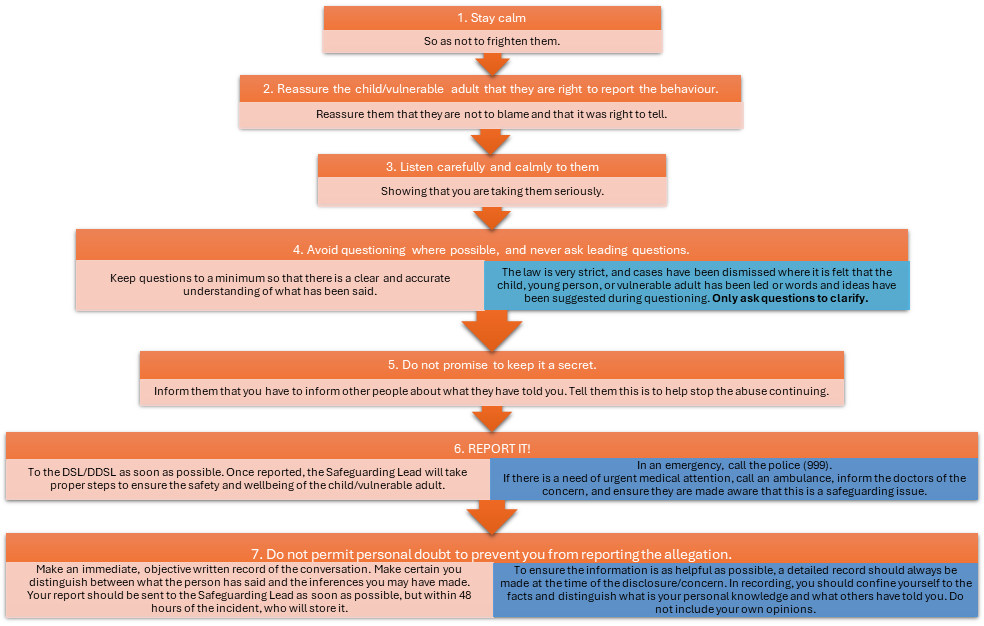
12. Records and Information Sharing
If staff are concerned about the welfare or safety of any child at the Company, they will record their concern on a Safeguarding Form, raising concerns about a young person on the TeamDesk internal electronic system. Any concerns should be passed to the DSL without delay.
Any information recorded will be kept in a separate named secure file. These files will be the responsibility of the DSL. Child protection information will only be shared within the Company on the basis of ‘need to know in the child’s interests’ and on the understanding that it remains strictly confidential.
Child protection information will only be kept in this file and this file will be kept up to date. Records of concern, copies of referrals, invitations to Child Protection Conferences, core groups and reports will be stored here. All child protection files will include a chronology, contents, front cover and will record significant events in the child’s life.
When a child leaves the Company, the DSL will ensure that the child protection file is forwarded to the receiving school or Local Authority in an appropriately agreed manner. The Company will retain evidence to demonstrate that it has acted accordingly when dealing with safeguarding matters and how the file has been transferred; this may be in the form of electronic records via audit features or a written confirmation of receipt from the receiving school and/or evidence of recorded delivery.
It should be noted that the Company is not required to keep copies of any records in the student record except if there is an ongoing legal action when the young person leaves the school. Custody of, and responsibility for, the records pass onto the school to which the student transfers.
13. Working with Parents and Carers
The Company is committed to working in partnership with parents/carers to safeguard and promote the welfare of children and to support them to understand statutory responsibilities in this area.
When new young people join the Company, parents and carers will be informed that there is a Safeguarding Policy. A copy will be provided to parents and carers on request and is available on the Company website. Parents and carers will be informed of the Company’s legal duty to assist colleagues in other agencies with child protection enquiries and what happens should there be cause to make a referral to Children’s Services.
The Company is committed to working with parents and parents positively, openly, and honestly and will ensure that all parents are treated with respect, dignity and courtesy. The Company respects parents and carers’ rights to privacy and confidentiality and will not share sensitive information unless granted permission, or where it is necessary to do so in order to safeguard a child from harm.
The Company will seek to share with parents and carers any concerns about their child, unless doing so may place a child at increased risk of harm. A lack of parental or carer engagement or agreement regarding the concerns the Company has about a child will not prevent the DSL making a referral to Children’s Services in those circumstances in which it is appropriate to do so.
In order to keep children safe and provide appropriate care for them, the Company requires referring bodies to provide accurate and up to date information regarding:
Full names and contact details of all adults with whom the child normally lives.
Full names and contact details of all persons with parental responsibility (if different from above).
Emergency contact details (if different from above).
Full details of any other adult authorised by the parent to collect the child from the Company (if different from the above).
The Company will retain this information on the young person’s referral file; it will only share information about young people with adults who have parental responsibility for a young person or where a parent has given permission and the Company has been supplied with the adult’s full details in writing.
14. Child Protection Conferences
Children’s Services will convene a Child Protection Conference once a child protection enquiry under Section 47 of the Children Act1989 has been undertaken and the child is judged to be at continuing risk of significant harm. A review conference will take place once a child has been made the subject of a Child Protection Plan in order to monitor the safety of the child and the required reduction in risk.
Staff members may be asked to attend a Child Protection Conference or core group meetings on behalf of the Company in respect of individual children. Usually, the person representing the Company at these meetings will be DSL or DDSL. In any event, the person attending will need to have as much relevant up to date information about the child as possible; any member of staff may be required to contribute to this process.
All reports for Child Protection Conferences will be prepared in advance using the guidance and template report. The information contained in the report will be shared with parents before the conference, as appropriate, and will include information relating to the child’s physical, emotional and intellectual development, and the child’s presentation at the Company. In order to complete such reports, all relevant information will be sought from staff working with the child in the Company.
Child protection conferences can be upsetting for parents. The Company recognises that staff are likely to have more contact with parents than other professionals involved. The Company will work in an open and honest way with any parent whose child has been referred to Children’s Services or whose child is subject to a Child Protection Plan. It is the responsibility of the Company to promote the protection and welfare of all children, and the aim is to achieve this in partnership with parents.
15. Safer Recruitment
The Company will ensure that at least one member of the interviewing panel and the Company Director, or appointed member of staff, have completed appropriate safer recruitment training. At all times the Company Director will ensure that safer recruitment practices are followed in accordance with the requirements of Keeping children safe in education - GOV.UK (2025). This includes the requirement to inform applicants of online searches taking place as part of the recruitment due diligence checks ahead of any interview.
The Company will use the Company Recruitment and Selection Process to deter and reject unsuitable candidates; it will require evidence of original academic certificates and will not accept testimonials but insist on taking up references prior to interview. The Company will question the contents of application forms if they are unclear, will undertake Disclosure and Barring Service Checks, and use any other means of ensuring the most suitable people to work with children are recruited and selected.
The Company Director will oversee appointed administration staff, who maintain safer recruitment checks are carried out in line with statutory requirements.
16. Safer Working Practice
All adults who come into contact with children have a duty of care to safeguard and promote their welfare. There is a legal duty placed upon the Company to ensure that all adults who work with, or on behalf of, children are competent, confident, and safe to do so.
All adults working at or visiting the Company will wear a lanyard.
All staff will be provided with a copy of the Company’s Code of Conduct at induction. They will be expected to know the Company’s Code of Conduct. There will be occasion when some form of physical contact is inevitable, for example if a child has an accident or is hurt or is in a situation of danger to themselves or others around them.
All staff will adhere to the Company Lone Working Policy. They will be expected to record their whereabouts through their session reports.
Guidance about acceptable conduct and safe practice will be given to all staff and volunteers during induction. These are sensible steps that every adult should take in their daily professional conduct with children. This advice can be found in ‘Guidance for Safer Working Practices for Adults who Work with Children and Young People in Education Settings’ (April 2020).’ All staff and volunteers are expected to carry out their work in accordance with this guidance and will be made aware that failure to do so could lead to disciplinary action.
17. Managing Allegations against Staff and Volunteers
The Company aims to provide a safe and supportive environment that secures the wellbeing and very best outcomes for the children accessing its services; it recognises that sometimes the behaviour of adults may lead to an allegation of abuse being made.
Allegations sometimes arise from a differing understanding of the same event, but when they occur, they are distressing and difficult for all concerned. The Company recognises that many allegations are genuine and there are some adults who deliberately seek to harm or abuse children.
The Company will take all possible steps to safeguard children and to ensure that adults in the Company are safe to work with children; it will always ensure that the procedures outlined in the local procedures and Part 4 of ‘Keeping Children Safe in Education’, DfE(2020) are adhered to and will seek appropriate advice from the LADO. The LADO can be contacted to request a consultation or to make a referral.
If an allegation is made or information is received about any adult who works in the Company that indicates they may be unsuitable to work with children, the member of staff receiving the information will inform the DSL or DDSL. This includes all visitors and volunteers. Should an allegation be made against the Company Director, this should be reported to the DSL or directly to the LADO.
The DSL, or DDSL, will seek advice from the LADO within one working day. No member of staff will undertake further investigations before receiving advice from the LADO.
Any member of staff or volunteer who does not feel confident to be able to raise their concerns with the DSL or DDSL should contact the LADO directly. Further guidance can be found in nspcc.org.uk/globalassets/documents/about-...as their whistleblowing helpline is for staff who do not feel able to raise concerns regarding child protection failures internally. Staff can call: 0800 028 0285 (available from 8:00am to 8:00pm, Monday to Friday)or via email: help@nspcc.org.uk.
The Company has a legal duty to refer to the Disclosure and Barring Service anyone who has harmed, or poses a risk of harm, to a child, or if there is reason to believe the member of staff has committed one of a number of listed offences, and who has been removed from working (paid or unpaid) in regulated activity, or would have been removed had they not left. The DBS will consider whether to bar the person. If these circumstances arise in relation to a member of staff at the Company, a referral will be made as soon as possible after there signation or removal of the individual in accordance with advice from the LADO and/or HR.
18. Relevant Policies
To underpin the values and ethos of the Company, and to ensure that young people at the Company are appropriately safeguarded, the following policies are also included under the safeguarding umbrella:
- Anti-bullying Policy
- Behavioural Policy
- GDPR Policy
- Health and Safety Policy
- Lone Working Policy
- Online Safety
- Recruitment and Selection Policy
- Safeguarding Standards
- Staff Code of Conduct
Whistle-Blowing Policy.
19. Statutory Framework
This Policy has been devised in accordance with the following legislation and guidance:
Guidance for Safer Working Practices for Adults who Work with Children and Young People in Education Settings’(April 2020)
What to do if you're worried a child is being abused - Advice for practitioners (March 2015)
Information sharing advice for safeguarding practitioners - GOV.UK
Mandatory reporting of female genital mutilation: procedural information -GOV.UK
Local safeguarding procedures.
Appendix 1 – Suspect Child at Risk: Action to Take
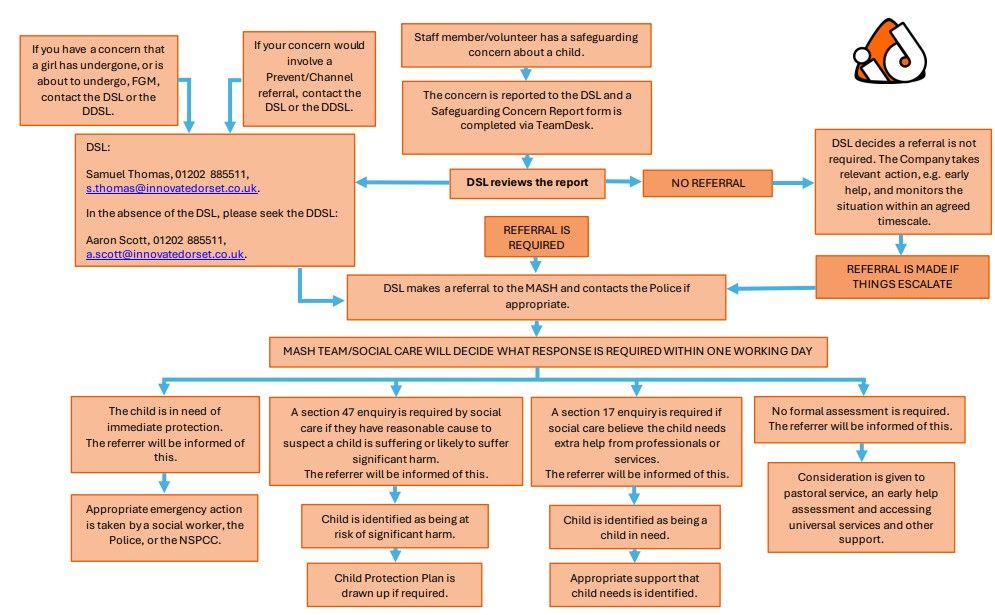
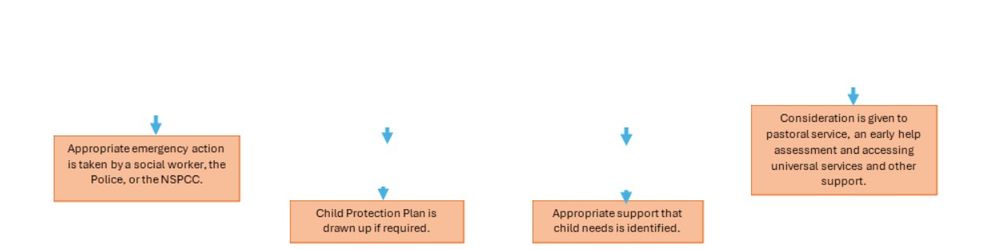
All concerns and correspondence are kept in a secure, confidential file. The child’s circumstances will be kept under review at all stages and a referral will be made again if it is appropriate for improving the child’s circumstances.
The child’s best interests must always come first.
The Local Authority Designated Officer for Dorset County Council (LADO):
- Phone: 01305 221122.
Email: lado@dorsetcouncil.gov.uk.
The Local Authority Designated Officer for BCP (LADO):
- Phone: 01202 817600.
Email: LADO@bcpconcil.gov.uk.
If the concern is about a member of staff/volunteer of the Company, please raise your concern with the DSL or DDSL, who will refer this to the appropriate LADO.
Appendix 2 – Safeguarding Induction Sheet (for New or Supply Staff and Regular Visitors or Volunteers)
Company staff have a statutory duty to safeguard and promote the welfare of children, and the Company takes this responsibility seriously.
If you have any concerns about a child or young person in the Company, you must share this information immediately with the DSL or one of the alternative post holders below.
Do not think that your worry is insignificant if it is about hygiene, appearance, or behaviour; we would rather you told us as we would rather know about something that appears small, rather than miss a worrying situation.
If you think the matter is very serious and may be related to child protection, for example, physical, emotional, sexual abuse or neglect, you must find one of the designated professionals detailed below and provide them with a written record of your concern. If you are unable to locate one of the designated professionals, ask a member of the Company office staff to find them and to ask them to speak with you immediately about a confidential and urgent matter.
Any allegation concerning a member of staff, a child’s Foster Carer or a volunteer should be reported immediately to the DSL, the DDSL, or the Company Director. If an allegation is made about the Company Director, you can contact the Local Authority Designated Officer (LADO).The NSPCC whistleblowing helpline is also available for staff who do not feelable to raise concerns regarding child protection failures internally (0800 028 0285: available from 8:00am to 8:00pm, Monday to Friday or via email: help@nspcc.org.uk).
The people you should talk to at the Company are:
Designated Safeguarding Lead:
Samuel Thomas,
41-44 King Street,
Wimborne,
Dorset
BH21 1EB
07706 309752
s.thomas@innovatedorset.co.ukDeputy Designated Safeguarding Lead:
Aaron Scott,
41-44 King Street,
Wimborne,
Dorset,
BH21 1EB.
07923 211898
.a.scott@innovatedorset.co.uk.Deputy Designated Safeguarding Lead:
Vanessa Phillips
41-44 King Street,
Wimborne,
Dorset
BH21 1EB
07923 211878
s.thomas@innovatedorset.co.ukDeputy Designated Safeguarding Lead:
Simon Keys
Unit4, Coldharbour Business Park
Sherborne
DT9 4JW
07706 309743
s.keys@innovatedorset.co.ukAppendix 3 – Vulnerability
Alongside the specific safeguarding issues listed below, staff should consider children who may be particularly vulnerable to abuse and may require early help. Factors that can increase vulnerabilities can include any children with additional needs, including:
- Children with special educational needs/disabled children (SEND).
- Children facing housing issues such as frequent moves and homelessness.
- Those living in families with chaotic lifestyles.
- Families with increased stress, parental mental health and/or drug and alcohol dependency.
- Those children living elsewhere, with friends, relatives, are in care or are leaving care.
- Asylum seekers/refugees.
- Those vulnerable to discrimination on the basis of their sexuality, race, religion, ethnicity or disability.
- Children at risk from neglect or abuse, including specific issues such as FGM, CSE, forced marriage, radicalisation and living in households with domestic abuse.
- Children with communication difficulties.
- Children without adequate parenting/supervision which could lead to abuse, risk-related behaviour, and sexual exploitation.
This this not an exhaustive list but merely an example of vulnerabilities that staff must consider when identifying safeguarding concerns. For more information on specific safeguarding issues please refer to Part 1 and Annex A of Keeping children safe in education - GOV.UK (2025).
Appendix 4 – Child Sexual Exploitation
The following list of indicators is not exhaustive or definitive, but it does highlight common signs that can assist professionals in identifying children or young people who may be victims of sexual exploitation.
Signs include:
- Underage sexual activity.
- Inappropriate sexual or sexualised behaviour.
- Sexually risky behaviour, 'swapping' sex.
- Repeated sexually transmitted infections.
- In girls, repeated pregnancy, abortions, miscarriage.
- Receiving unexplained gifts or gifts from unknown sources.
- Having multiple mobile phones and worrying about losing contact via mobile phone.
- Having unaffordable new things (clothes, mobile phone) or expensive habits (alcohol, drugs).
- Changes in the way they dress.
- Going to hotels or other unusual locations to meet friends.
- Seen at known places of concern.
- Moving around the country, appearing in new towns or cities, not knowing where they are.
- Getting in/out of different cars driven by unknown adults.
- Having older boyfriends or girlfriends.
- Contact with known perpetrators.
- Involved in abusive relationships, intimidated and fearful of certain people or situations.
- Hanging out with groups of older people, or anti-social groups, or with other vulnerable peers.
- Associating with other young people involved in sexual exploitation.
- Recruiting other young people into exploitative situations.
- Truancy, exclusion, disengagement with the Company, opting out of education altogether.
- Unexplained changes in behaviour or personality (chaotic, aggressive, sexual, mood swings, volatile behaviour, emotional distress).
- Self-harming, suicidal thoughts, suicide attempts, overdosing, eating disorders.
- Drug or alcohol misuse.
- Getting involved in crime/Police involvement, Police records.
- Involved in gangs, gang fights, gang membership.
Injuries from physical assault, physical restraint, sexual assault.
Appendix 5 –Child Criminal Exploitation/County Lines
Criminal exploitation of children is a geographically widespread form of harm that is a typical feature of county lines. Criminal networks or gangs groom and exploit children and young people to carry drugs and money from urban areas to suburban and rural areas, market, and seaside towns. Key to identifying potential involvement in county lines are missing episodes when the victim may have been trafficked for purposes of transporting drugs. A referral to the National Referral Mechanism should be considered. Like other forms of abuse and exploitation, county line exploitation:
- Can affect any child or young person (male or female) under the age of 18 years.
- Can affect a vulnerable adult over the age of 18 years.
- Can involve force and/or enticement-based methods of compliance and is often accompanied by violence or threats of violence.
- Can be perpetrated by individuals or groups, males or females, and young people or adults.
Is typified by some form of power imbalance in favour of those perpetrating the exploitation. Whilst age may be the most obvious, this power imbalance can also be linked to gender, cognitive ability, physical strength, status and access to economic or other resources.
Signs and symptoms may include:
- Persistently going missing from home or the Company.
- Being found out of area.
- Unexplained acquisition of money, clothes or mobile phone.
- Excessive receipt of calls and text messages.
- Relationships with older controlling individuals.
- Associated with gangs.
- Leaving home or care without explanation.
- Suspicion of self-harm, physical assault or unexplained injuries.
- Parental concerns.
- Significant decline in the Company performance.
Significant changes in emotional wellbeing.
Appendix6 – Belief and Faith-Related Abuse: Female Genital Mutilation
It is essential that staff are aware of FGM practices and the need to look for signs, symptoms and other indicators of FGM. FGM involves procedures that intentionally alter/injure the female genital organs for non-medical reasons. There are four types of procedure:
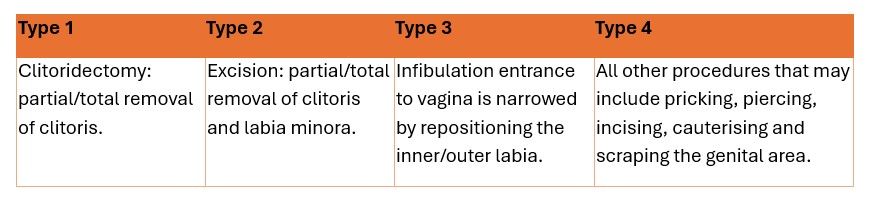
Why is it carried out?
Belief that FGM:
- Brings status/respect to the girl – social acceptance for marriage.
- Preserves a girl’s virginity.
- Part of being a woman/rite of passage.
- Upholds family ‘honour’.
- Cleanses and purifies the girl.
- Gives a sense of belonging to the community.
- Fulfils a religious requirement.
- Perpetuates a custom/tradition.
- Helps girls be clean/hygienic.
- Is cosmetically desirable.
Is mistakenly believed to make childbirth easier.
Is FGM legal?
FGM is internationally recognised as a violation of human rights of girls and women. It is illegal in most countries, including the UK.
Circumstances and occurrences that may point to FGM happening:
- Child talking about getting ready for a special ceremony.
- Family taking a long trip abroad.
- Child’s family being from one of the ‘at risk’ communities for FGM (Kenya, Somalia, Sudan, Sierra Leon, Egypt, Nigeria, Eritrea as well as non-African communities including Yemeni, Afghani, Kurdistan, Indonesia and Pakistan).
- Knowledge that the child’s sibling has undergone FGM.
Child talks about going abroad to be ‘cut’ or to prepare for marriage.
Signs that may indicate a child has undergone FGM:
- Prolonged absence from the Company and other activities.
- Behaviour change on return from a holiday abroad, such as being withdrawn and appearing subdued.
- Bladder or menstrual problems.
- Finding it difficult to sit still and looking uncomfortable.
- Complaining about pain between the legs.
- Mentioning something somebody did to them that they are not allowed to talk about.
- Secretive behaviour, including isolating themselves from the group.
- Reluctance to take part in physical activity.
- Repeated urinal tract infection.
Disclosure.
The ‘One Chance’ rule:
As with forced marriage, there is the ‘One Chance’ rule. It is essential that staff take action without delay. As Keeping Children Safe in Education (KCSiE) now states: ‘Undersection 5B of the Female Genital Mutilation Act 2003 (as inserted by sect 74 of the Serious Crime Act 2015) places a statutory duty upon teachers, along with social workers and healthcare professionals, to report to the police where they discover that FGM appears to have been carried out on a girl under 18. Those falling to report such cases will face disciplinary sanctions’.
Further information:
Appendix 7 –So-Called ‘Honour-Based’ Violence
So-called ‘honour-based violence’ (HBV) encompasses incidents or crimes that have been committed to protect or defend the honour of the family and/or the community, including:
- Female genital mutilation
- Forced marriage
Breast ironing.
Abuse committed in the context of preserving “honour” often involves a wider network of family or community pressure and can include multiple perpetrators. It is important to be aware of this dynamic and additional risk factors when deciding what form of safeguarding action to take. All forms of HBV are abuse (regardless of the motivation) and should be handled and escalated as such. If in any doubt, staff should speak to the DSL (or DDSL). Professionals in all agencies, and individuals and groups in relevant communities, need to be alert to the possibility of a child being at risk of HBV, or already having suffered HBV.
Appendix 8 – Forced Marriage
Forcing a person into marriage is a crime in England and Wales. A forced marriage is one entered into without the full and free consent of one or both parties and where violence, threats, or any other form of coercion is used to cause a person to enter into the marriage. Threats can be physical or emotional and psychological. A lack of full and free consent can be where a person does not consent or where they cannot consent (if they have learning disabilities, for example). Nevertheless, some communities use religion and culture as a way to coerce a person into marriage. Academies can play an important role in safeguarding children from forced marriage.
Signs and symptoms may include:
Young people may appear anxious, depressed and emotionally withdrawn with low self-esteem.
They may have mental health disorders and display behaviours such as self-harming, self-cutting or anorexia.
Sometimes they may come to the attention of the Police, having been discovered shoplifting or taking drugs or alcohol.
Often young people’s symptoms can be exacerbated in the periods leading up to the holiday season.
Young people may present with a sudden decline in their performance, aspirations or motivation.
They may be subject to excessive restrictions and control at home.
Some young people may not be allowed to attend any extra-curricular or after-the Company activities.
Girls and young women may be accompanied to and from the Company, and even during lunch breaks.
Some young people may stop attending the Company.
Their homework is incomplete or appears rushed; this may be the result of being actively discouraged from doing it by family members.
Young people may do their homework late at night, which frequently shows in the Company because they are lethargic, unable to concentrate and have a general appearance of tiredness.
Professionals being told that the student is out of the country.
There are occasions when older siblings (usually brothers) and cousins keep a close eye on girls to make sure that they do not meet anyone or talk to friends.
Conflict between the student and their parents about whether the student will be allowed to continue their education.
Family history of older siblings leaving education early and marrying early.
How professionals can help:
Signposting, where appropriate, to forced marriage materials or where further support and advice can be accessed.
Displaying relevant information e.g. details of the NSPCC Helpline, Childline, and appropriate local and national support groups on forced marriage.
Ensuring that a private telephone is made available, should young people need to seek advice discreetly.
Educating teachers, lecturers and other staff about the issues surrounding forced marriage and the presenting symptoms; appropriate training should be included in continuing professional development(CPD).
Referring young people to an Education Welfare Officer, VMG Tutor, Learning Manager, or the Company Inclusion Co-Ordinator as appropriate.
Encouraging young people to access appropriate advice, information and support.
Appendix 9 – Radicalisation
The Counter Terrorism and Security Act 2015 was published on 12th March 2015. Section 26 of the Act places a duty on academies in England(and Wales) to prevent people being drawn into terrorism. This duty applies to all schools, whether publicly funded or independent, and organisations covered by the Early Years Innovate Dorset Ltd. Stage framework.
Schools Leaders must:
- Establish or use existing mechanisms for understanding the risk of extremism.
- Ensure staff understand the risk and build capabilities to deal with it.
- Communicate and promote the importance of the duty.
Ensure staff implement the duty effectively.
Other duties on academies include:
- Effective partnership working with other local agencies, e.g. Safeguarding Partners (former LSCB) police, health, etc.
- Information sharing.
- Maintaining appropriate records.
- Assessing local risk of extremism (including Far Right extremism).
- Demonstrating they are protecting children.
- Developing clear protocols for visiting speakers.
- Safeguarding policies that take account of Local Safeguarding Partners’ policies and procedures.
- Training staff to give them knowledge and confidence.
- Ensuring there is robust ICT protocols that filter out extremist materials.
Company buildings must not be used to give a platform to extremists.
Understanding and Recognising Risks and Vulnerabilities of Radicalisation
Children and young people can be drawn into violence or they can be exposed to the messages of extremist groups by many means. These may include: through the influence of family members or friends, direct contact with extremist groups and organisations, or, increasingly, through the internet and social media. This can put a young person at risk of being drawn into criminal activity and has the potential to cause Significant Harm.
The risk of radicalisation is the product of a number of factors, and identifying this risk requires staff to exercise their professional judgement, seeking further advice as necessary. It may be combined with other vulnerabilities or may be the only risk identified.
Possible indicators include:
- Use of inappropriate language.
- Possession of violent extremist literature.
- Behavioural change.
- Advocating violent actions and means.
- Association with known extremists.
Seeking to recruit others to an extremist ideology.
Further information:
gov.uk/government/publications/preve...
Appendix 10 – Private FosteringMany people find themselves looking after someone else’s child without realising that they may be involved in private fostering. A private fostering arrangement is one that is made privately (that is to say, without the involvement of a Local Authority) for the care of a child under the age of 16 (under 18, if disabled) by someone other than a parent or immediate relative. If the arrangement is to last, or has lasted, for 28 days or more it is private fostering.
The Children Act 1989 defines an immediate relative as: a grandparent, brother, sister, uncle or aunt (whether of full blood or half blood or by marriage or civil partnership), or a step parent.
People become involved in private fostering for all kinds of reasons. Examples of private fostering include:
- Children who need alternative care because of parental illness.
- Children whose parents cannot care for them because their work or study involves long or antisocial hours.
- Children sent from abroad to stay with another family, usually to improve their educational opportunities.
- Unaccompanied asylum seeking and refugee children.
- Teenagers who stay with friends (or other non-relatives) because they have fallen out with their parents.
Children staying with families while attending a Company away from their home area.
There is a mandatory duty on the Company to inform the Local Authority of a Private Fostering Arrangement. The Local Authority has a duty to check that the young person is being properly cared for and that the arrangement is satisfactory.
Further information:
gov.uk/government/publications/child....
Appendix 11 – Children Missing Education
A child going missing from education is a potential indicator of abuse or neglect, including sexual exploitation, FGM, forced marriage or travelling to conflict zones. Company staff will be alert to these safeguarding concerns when a young person goes missing for an extended period, or on repeat occasions.
The Company must notify the Local Authority of any young person who fails to attend sessions regularly after making reasonable enquiries or has been absent without permission for a continuous period of 10 days or more. The Company (regardless of designation) must also notify the Local Authority of any young person who is to be deleted from the admission register because they:
Have been taken out of the Company by their parents and is being educated outside the Company system (e.g. home education).
Have ceased to attend the Company and no longer lives within a reasonable distance of the Company at which they are registered (moved within the city, within the country or moved abroad but failed to notify the Company of the change).
Have been displaced as a result of a crisis, e.g. domestic violence or homelessness.
Are in custody for a period of more than four months due to a final court order and the proprietor does not reasonably believe they will return to the Company at the end of that period.
Have been permanently excluded.
The Company will demonstrate that it has taken reasonable steps to ascertain the whereabouts of children that would be considered ‘missing’. Absences from the Company may be a sign of abuse.
Further information:
gov.uk/government/publications/child....
Appendix 12 – Peer on Peer Abuse
The Company recognises that children are vulnerable to and capable of abusing their peers. Such abuse is taken as seriously as abuse perpetrated by an adult. Peer on peer abuse will not be tolerated or passed off as part of “banter” or “growing up”.
In cases where peer on peer abuse is identified, the Company will follow child protection procedures, recognising that both the victim and perpetrator will require support.
The Company recognises that peer on peer abuse can manifest itself in many ways, such as:
- Child sexual exploitation/child criminal exploitation.
- Bullying.
- Radicalisation.
- Abuse in intimate friendships/relationship abuse.
- Children who display sexually harmful behaviour.
- Gang associated and serious violence.
Technology can be used for bullying and other abusive behaviour.
There are a number of factors that make children more vulnerable to peer on peer abuse:
- Experience of abuse within their family.
- Living with domestic violence.
- Young people in care.
- Children who go missing.
Children with additional needs (SEN and/or disabilities).
Research tells us that girls are more frequently identified as being abused by their peers, and girls are more likely to experience unwanted sexual touching in schools. Boys are less likely to report intimate relationship abuse. Boys report high levels of victimisation in areas where they are affected by gangs.
There is an increasing evidence base emerging about the sexual exploitation of boys (both by adults and peers). The Company recognises that both boys and girls experience peer on peer abuse, but they do so in gendered ways.
A difficult feature of peer on peer abuse is that the perpetrators could be victims themselves and possibly are being abused by their parents or caregivers.
Relationship abuse is unacceptable behaviour between two people. One does not have to be in an ‘official couple’ to experience abuse and it does not matter what the relationship looks like; regardless of sexual orientation, or whether one is a girl, boy or has another gender identity.
Further information:
disrespectnobody.co.uk/relationship-abuse/what-is-re... details some of the complicated reasons why children abuse other children:
- The child may have been emotionally, physically, or sexually abused themselves.
- The child may have witnessed physical or emotional violence.
- The child may have viewed sexually explicit movies, video games or other materials.
- The child may have just acted impulsively without meaning to harm anyone.
- It could be an indicator of even worse abuse going on in the child’s home.
Peer abuse must be taken extremely seriously for these reasons.
Preventing Peer on Peer Abuse
Peer abuse can be prevented. Adults who work with children must be aware of the potential for abuse between children and:
- Have clear, robust policies on dealing with key issues, such as online bullying.
- Ensure staff and young people are aware of the policies.
- Identify any blind spots within the Company.
- Supervise and be aware of potential risky areas (e.g. toilets, kitchen, outside).
- Pay attention and monitor children who may be hiding in areas out of view.
- Take steps to prevent isolation.
- Separate children if needed.
- Increase supervision during key times.
- If they suspect a child is abusing another, ensure they pass this onto a Designated Person.
Where risk is identified through a student, put a risk assessment in place.
Appendix 13 – Sexually Harmful Behaviour
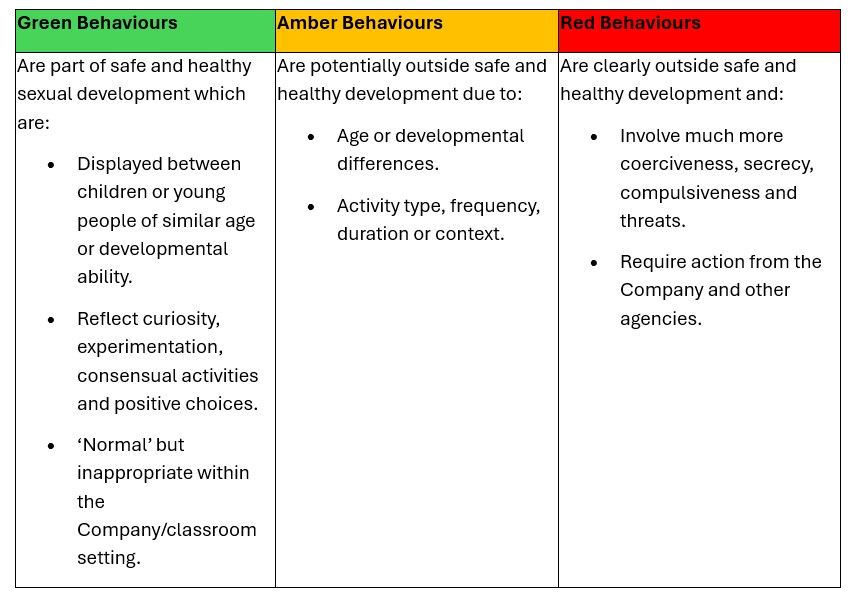
For further information of sexualised behaviour thresholds, visit brook.org.uk.
Sexual violence and harassment in academies:
Sexual violence and sexual harassment can occur between two children of any sex. They can also occur through a group of children sexually assaulting or sexually harassing a single child or group of children.
Sexual harassment is ‘unwanted conduct of a sexual nature’ that can occur online and offline.
Sexual harassment can include sexual comments, such as:
- Telling sexual stories.
- Making lewd comments.
- Making sexual remarks about appearance, sexual “jokes” or taunting.
Physical behaviour, such as:
- Deliberating brushing against someone.
Interfering with someone’s clothes.
Online sexual harassment, which might include:
- Non-consensual sharing of sexual images/videos and sharing sexual images and videos (both often referred to as sexting).
- Inappropriate sexual comments on social media.
- Exploitation.
Coercion and threats.
It is more likely that girls will be the victims of sexual violence and more likely that sexual harassment will be perpetrated by boys.
Children with Special Educational Needs and Disabilities (SEND) can be especially vulnerable.
The Company is aware of the importance of:
- Making clear at an age-appropriate level that sexual violence and sexual harassment is not acceptable, will never be tolerated and is not an inevitable part of growing up.
- Not tolerating or dismissing sexual violence or sexual harassment as “banter”, “part of growing up”, “just having a laugh” or “boys being boys”.
- Challenging behaviours (which are potentially criminal in nature), such as grabbing bottoms, breasts and genitalia.
Dismissing or tolerating such behaviours risks normalising them.
Upskirting
‘Upskirting’ typically involves taking a picture under a person’s clothing without them knowing, with the intention of viewing their genitals or buttocks to obtain sexual gratification, or cause the victim humiliation, distress or alarm. This is now a criminal offense, so staff should report concerns immediately to the DSL.
Further information: Keeping children safe in education - GOV.UK (2025).
Sexting:
Sexting can be defined as ‘sending or posting sexually suggestive images, including nude or semi-nude photographs, via mobiles or over the internet’.
If staff become concerned about a ‘sexting’ issue, they should not look at, share or print any indecent image and should:
If a device is involved, confiscate it and set it to flight mode or, if not possible, switch it off.
Seek advice: give the electronic device immediately to the DSL. Report concerns following normal child protection procedures.
Concerning factors the DSL should look out for:
- Is there a significant age difference between the sender/receiver?
- Is there any external coercion involved or encouragement beyond the sender/receiver?
- Do you recognise the child as more vulnerable than usual, i.e. at risk?
- Is the image of a severe or extreme nature?
- Is the situation isolated or has the image been more widely distributed?
- Have these children been involved in a sexting incident before?
Are there other circumstances relating to either sender or recipient that may add cause for concern, i.e. difficult home situation?
Remember: the production and distribution of sexting images involving anyone under the age of 18 is illegal and needs very careful management for all those involved.
Further information:
gov.uk/government/groups/uk-council-....
Appendix 14 –Trafficking and Modern Slavery
“Trafficking of persons” means the recruitment, transportation, transfer, harbouring or receipt of persons by means of the threat or use of force or other forms of coercion, of abduction, of fraud, of deception, of the abuse of power or of a position of vulnerability, or of the giving or receiving of payments or benefits to achieve the consent of a person having control over another person for the purpose of exploitation. Exploitation includes, at a minimum, the exploitation of the prostitution of others or other forms of sexual exploitation, forced labour or services, slavery or practices similar to slavery, servitude or the removal of organs.
“Child” shall mean any person under eighteen years of age.
The Palermo Protocol establishes children as a special case. Any child transported for exploitative reasons is considered to be a trafficking victim, whether or not they have been forced or deceived. This is partly because it is not considered possible for children to give informed consent. Even when a child understands what has happened, they may still appear to submit willingly to what they believe to be the will of their parents or accompanying adults. It is important that these children are protected too.
Why are children trafficked?
Children are trafficked for many reasons, including sexual exploitation, domestic servitude, labour, benefit fraud and involvement in criminal activity such as pick- pocketing, theft and working in cannabis farms. There are a number of cases of minors being exploited in the sex industry. Although there is no evidence of other forms of exploitation such as ‘organ donation’ or ‘harvesting’, all agencies should remain vigilant.
Children may be trafficked from other countries for a variety of reasons. There are a number of factors in the country of origin that might make children vulnerable to being trafficked.
The factors listed below are by no means a comprehensive list:
- Cultural attitudes
- Discrimination
- Dysfunctional families
- Grooming
- Inadequate local laws and regulations
- Lack of education
- Political conflict and economic transition
Poverty.
Potential indicators:
Once in the UK the child:
- Receives unexplained/unidentified phone calls whilst in placement/temporary accommodation.
- Shows signs of physical or sexual abuse, and/or has contracted asexually transmitted infection or has an unwanted pregnancy.
- Has a history with missing links and unexplained moves.
- Has gone missing from Local Authority care.
- Is required to earn a minimum amount of money every day.
- Works in various locations.
- Has limited freedom of movement.
- Appears to be missing for periods of time.
- Is known to beg for money.
- Performs excessive housework chores and rarely leaves the residence.
- Is being cared for by adult/s who are not their parents and the quality of the relationship between the child and their adult carer/s is not good.
- Is one among a number of unrelated children found at one address.
- Has not been registered with or attended a GP practice.
- Has not been enrolled in the Company.
- Has to pay off an exorbitant debt, e.g. for travel costs, before having control over their own earnings.
- Is permanently deprived of a large part of their earnings by another person.
Is excessively afraid of being deported.
Further information:
Safeguarding children who may have been trafficked - GOV.UK.
Appendix 15 – Domestic Abuse
The cross-government definition of domestic violence and abuse is: ‘any incident or pattern of incidents of controlling, coercive, threatening behaviour, violence or abuse between those aged 16 or over who are, or have been, intimate partners or family members regardless of gender or sexuality’. The abuse can encompass, but is not limited to:
- Emotional
- Financial
- Physical
- Psychological
Sexual.
Exposure to domestic abuse and/or violence can have a serious, long lasting emotional and psychological impact on children. In some cases, a child may blame themselves for the abuse or may have had to leave the family home as a result.
Signs, Indications and Effects
It is often difficult to tell if domestic abuse is happening because it usually takes place in the family home and abusers can act very differently when other people are around. Children who witness domestic abuse may:
- Become aggressive.
- Display anti-social behaviour.
- Suffer depression or anxiety.
Not do as well in the Company due to difficulties at home or disruption of moving to, as well as from, refuges.
Other Signs and Symptoms May Include:
- Alcohol.
- Becoming withdrawn.
- Being absent from the Company.
- Being clingy.
- Changes in eating habits.
- Drugs.
- Eating disorders.
- Nightmares.
- Obsessive behaviour.
- Problems sleeping.
- Self-harm.
- Soiling clothes.
- Suddenly behaving differently.
- Taking risks.
- Thoughts of suicide.
Wetting the bed.
See nspcc.org.uk.
Homelessness
Types of homelessness and bad housing
- Living in temporary or emergency accommodation (such as B&Bs and hostels).
- Hidden homelessness (staying with friends or family on a temporary basis or living in overcrowded conditions).
- Couch/sofa surfing.
- Moving from one place to another.
Being at risk of abuse or violence leading to homelessness or overcrowding.
Impact of homelessness
- Practical issues include loss of possessions required for the Company e.g. books, uniform, etc.
- May be unkempt due to lack of laundry services.
- Physically exhausted due to sleeping arrangements.
- Emotionally exhausted due to increased stress.
- Signs of severe emotional trauma leading to emotional stress, anxiety.
- Changes in behaviour or/and problematic behaviour.
- The young person may become withdrawn or aggressive.
- If placed out of area, they may arrive late or miss school due to transport/financial difficulties.
- The young person’s ability to maintain relationships may be affected.
- May ‘stand out’ more to peers, leading to feelings of alienation and self- consciousness.
Impact on attainment levels and ability to learn.
Appendix 16 – Self Harm
Self-harm refers to a person harming their own body on purpose. About 1 in 100 people hurt themselves in this way. More females hurt themselves than males. A person who self-harms usually does not mean to kill themselves, however they are at higher risk of attempting suicide if they do not get help.
Self-harm tends to begin in teen or early adult years. Some people may engage in self-harm a few times and then stop. Others engage in it more often and have trouble stopping.
Examples of self-harm include:
- Cutting themselves (such as using a razor blade, knife, or other sharp object to cut the skin).
- Punching themselves or punching things (like a wall).
- Burning themselves with cigarettes, matches, or candles.
- Pulling out their hair.
- Poking objects through body openings.
Breaking their bones or bruising themselves.
Many people cut themselves because it gives them a sense of relief. Some people use cutting as a means to cope with a problem. Some teenagers say that when they hurt themselves, they are trying to stop feeling lonely, angry, or hopeless.
Further information:
Appendix 17 – Key Safeguarding Contacts
MASH (BCP Multi-Agency Safeguarding Hub)
Dorset Safeguarding brings agencies together in one place (Poole Police Station). It includes staff from Dorset and the Bournemouth, Christchurch and Poole (BCP) Council Children’s Social Care services alongside Dorset Healthcare and Dorset Police.
Contact during office hours (Monday to Thursday 8.30-5.15: Friday8.30-4.45):
- Telephone: 01202 735046.
- Email: MASH@bcpcouncil.gov.uk.
- Visit: Bournemouth & Poole Local Safeguarding Children Board.
The Children’s Social Care Out of Hours Service – BCP Council
This is the emergency response service for any child who is in crisis, needs urgent help or is at serious risk of significant harm.
Hours of operation are: 5pm to 9am from Monday to Friday, all day Saturdays and Sundays and all bank holidays, including Christmas Day and New Year's Day.
- Telephone: 01202 738256.
- Email: ChildrensOOHS@bcpcouncil.gov.uk.
- Out of Hours Guide for Professionals: 01202 228866.
Direct link to webpage: Children’s social care out of hours service | BCP.
Dorset County Council – ChAD services (Children’s Advice and Duty Service);Children’s Advice and Duty Service (ChAD) for professionals
Name: single point of contact for professionals for safeguarding concerns.
Telephone: 01305 228558.
Children’s Advice and Duty Service (ChAD)
Name: single point of contact for safeguarding concerns.
Telephone: 01305 228866.
Direct link: all Dorset CC contact links in one place.
The above site link includes details for: ChAD, Locality Teams (Chesil-Dorchester-East Dorset-North Dorset-Purbeck-West Dorset) plus those below.
NSPCC for information about the different types of child abuse and what you should do if one is worried about a child.
Childline for private and confidential phone calls for children up to 18years.
Frank for friendly, confidential advice and questions about drugs.
Anti-Bullying Alliance for information about how to stop bullying.
Think U Know for keeping children and young people safe online.
CEOP for developing child safeguarding policies and providing advice on making the internet safer for young people.
Pan-Dorset Safeguarding Children Partnership (PDSCP): Now the Dorset Safeguarding Children Partnership (DSCP) and the Bournemouth, Christchurch and Poole Safeguarding Children Partnership (BCPSCP)
The Company follows safeguarding guidance according to what was formerly known as the Pan-Dorset Safeguarding Children Partnership - Dorset Safeguarding Children Partnership (2023) (PDSCP), and is now known as the Dorset Safeguarding Children Partnership (DSCP) and the BCP (Bournemouth, Christchurch and Poole) Safeguarding Children Partnership (BCPSCP).
Visit the PDSCP website for further advice and support if you have concerns about a child. These partnerships bring together information for children, young people, their families, and anyone who works with children and families.
Appendix 18 – Child Safeguarding Practice and Child Death Review
In adherence to the Company Policy, handling a child's death necessitates a customised, collaborative approach. Professionals from healthcare, pathology, patient safety, law enforcement, and various community services are engaged in discussions based on their expertise. This inclusive, multidisciplinary effort aims to comprehensively understand the circumstances surrounding the child’s passing and support the grieving family.
The following professionals may be invited, depending on their ability to contribute meaningfully to a discussion on the circumstances of the child’s death:
Hospital or community healthcare staff involved with the child at the end of their life, and those known to the family prior to this event.
Pathologist, if a post-mortem examination has taken place, or placental histology has been reported in the case of a neonatal death.
Other professional peers from relevant hospital departments and community services.
Patient safety team, if a serious incident investigation has taken place.
Coroner’s officer, if the case has been referred to the coroner.
Senior investigating police officer, if there is a Joint Agency Response.
Other practitioners, for example:
- Social work
- Ambulance and fire services
- Primary care clinicians
- School nurse
- Head teacher
- Representatives from voluntary organisations.
The Company is committed to cooperating with any requests from the CDRM, including providing safeguarding information.
Appendix19 – Recording, Storage, and Sharing of Information
The Company will hold records in line with the Company records retention schedule. All safeguarding concerns, discussions, decisions made, and the reasons for those decisions, must be recorded in writing. If a member of staff is in any doubt about whether to record something, they are to discuss it with the DSL.
Records will include:
- A clear and comprehensive summary of the concern.
- Details of how the concern was followed up and resolved.
- A note of any action taken, decisions reached and the outcome.
Concerns and referrals will be kept in a separate child protection file for each child on MyConcern.
Any non-confidential records will be readily accessible and available. Confidential information and records will be held securely and only available to those who have a right or professional need to see them. Safeguarding records relating to individual children will be retained for a reasonable period of time after they have left the Company.
Safeguarding records that contain information about allegations of sexual abuse will be retained for the Independent Inquiry into Child Sexual Abuse (IICSA), for the term of the inquiry. If a child for whom the school has, or has had, safeguarding concerns moves to another school, the DSL will ensure that their child protection file is forwarded promptly, securely, and separately from the main student file.
In addition, if the concerns are significant or complex, and/or social services are involved, the DSL will speak to the DSL of the receiving school and provide information to enable them to have time to make any necessary preparations to ensure the safety of the child.
All safeguarding records are held on a secure cloud-based system called MyConcern. Where it is deemed that other agencies ‘need to know’, information needed to safeguard young people will be shared with external agencies supporting a child/young person or their family inline with GDPR. Please note: GDPR does not prevent the sharing of information in order to safeguard a child/young person.
Additions to Our Policy
All Company staff receive appropriate safeguarding and child protection training (including online safety) which includes an understanding of the expectations, applicable roles and responsibilities at induction and regular training updated as required, continuing the Company’s best practice of providing staff with relevant skills and knowledge to safeguard children effectively.

CONTROL SHEET
Version Number: 1
Author: Samuel Thomas
Safeguarding Policy
Status of policy: Approved Approved by: Kevin Tatchell Date of Review: 13 January 2026 Reviewed by: Samuel Thomas 
Next Review: 13 January 2027